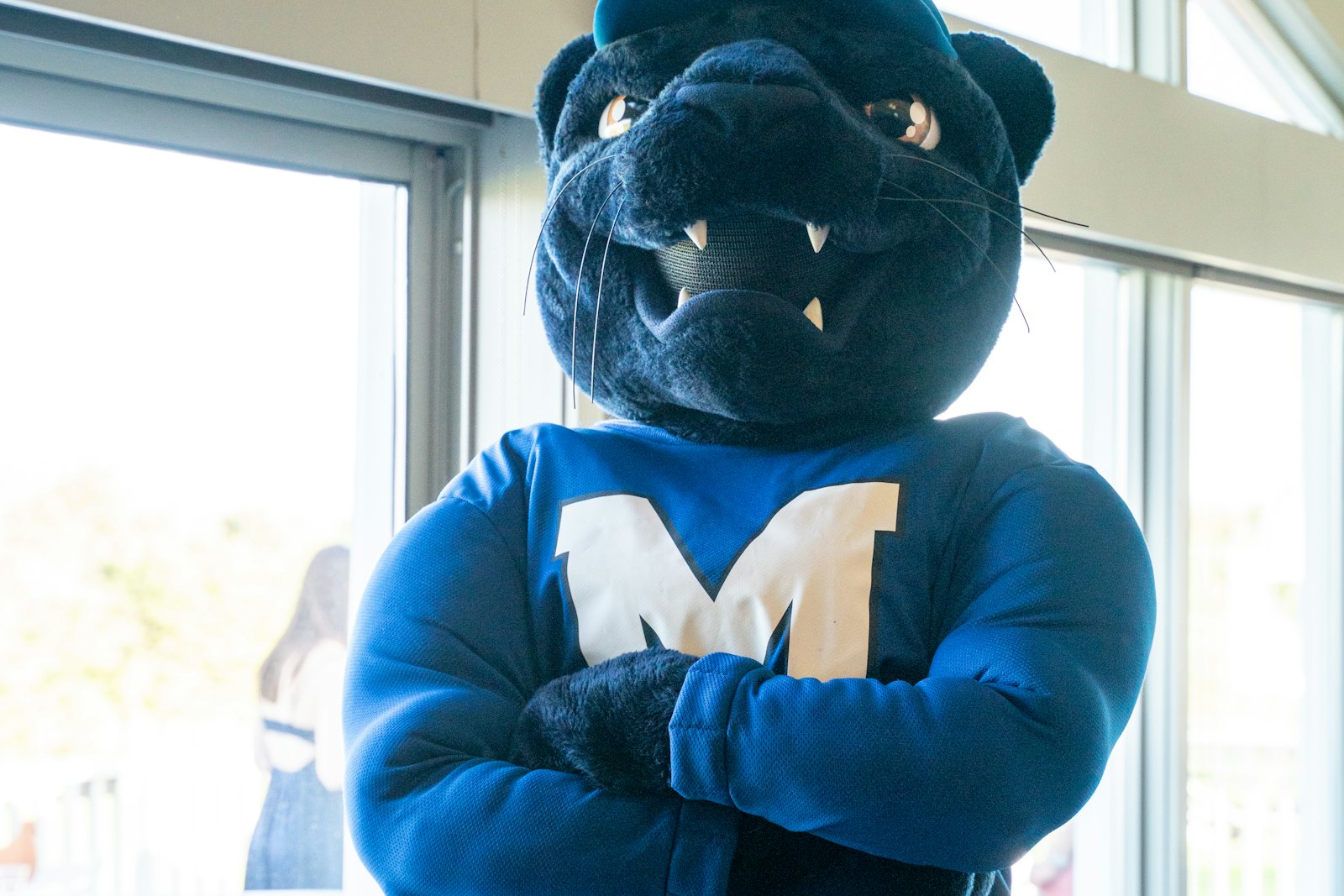
Most brand characters are commissioned as a deliverable: one illustration, one costume, one campaign. Eighteen months later the costume is in a storeroom and nobody can draw the character again without the original designer.
The alternative costs slightly more at the start and behaves completely differently. Here is the distinction that matters.
A mascot is a presence. A character is a system.
A mascot exists to be at things. It waves, it poses, it is photographed. Its value is attention at a moment.
A character has a name, a personality, a set of things it would and would not do, a consistent construction that any illustrator can reproduce, and a defined relationship to the brand. Its value compounds, because every appearance adds to something.
You can have a mascot without a character. You cannot have a durable character without the rules.
What the rulebook contains
This is the cheap part and the part most often skipped:
- Construction — proportions, the shapes the form is built from, what stays constant at any size.
- Turnaround — front, three-quarter, side, back. Without this, the second illustrator invents a different character.
- Expression sheet — six to ten faces. This is what gives the character range beyond a single pose.
- Pose library — ten to fifteen approved poses covering the situations you will actually need: greeting, pointing, holding a product, with a child, in a queue.
- Colour and material specification — including how colours translate to fabric and to print, which are not the same.
- Voice — how it speaks if it speaks, and crucially whether it speaks at all. Silent characters age better and licence more easily.
- Rules of behaviour — what it never does. This is the clause that protects you when someone proposes putting it in a situation that damages the brand.
A rulebook for a single character is a few pages. It is the difference between an asset and a drawing.
The costume question
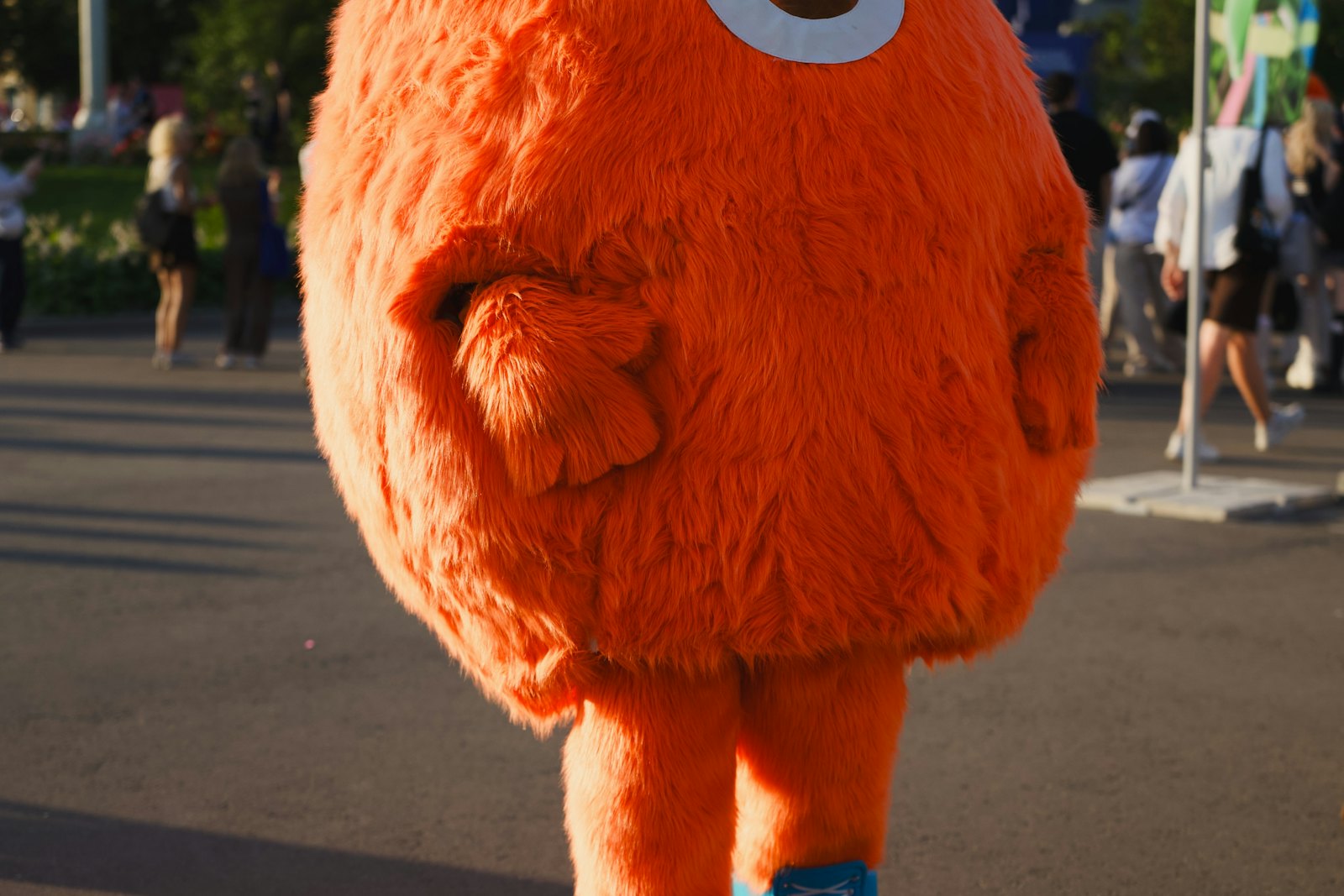
A physical costume is a serious commitment, and the honest version of the cost is not the costume:
- The costume itself — a well-made, well-ventilated one is a meaningful four-figure item and a cheap one looks cheap in every photograph taken of it, forever.
- The performer — a trained one, briefed on the behaviour rules, who understands child interaction.
- A handler — never send a costume out alone. Vision is restricted and the performer cannot manage a crowd.
- Breaks — a full costume is physically demanding. Realistically 30–40 minutes on, 20 minutes off, which means two performers for a full day.
- Transport, storage and cleaning.
If you cannot fund the performer, the handler and the rotation, do not buy the costume. A badly performed mascot is worse than none.
When a character is the right answer
- You talk to families or children, where a character does work a logo cannot.
- Your product is abstract or technical and needs a face to be approachable.
- You appear at many events over years and need continuity between them.
- You have a licensing ambition — a character with a rulebook and clear ownership can be licensed; a one-off illustration cannot.
When it is not
- A single campaign with no plan beyond it.
- A premium or clinical brand where approachability is not the problem.
- No budget for the rules, only for the drawing.
The ownership clause
Whatever you commission, settle this in writing before work starts: who owns the character, in what territories, for what uses, and what happens to the rulebook if the relationship ends. A character you cannot legally extend is a character with one year in it.
Related reading: putting a brand character on an exhibition stand covers what changes when it has to work in a hall.